Calibration
Requirements
Color Negative Calibration requires:
- DT Stellar RGBW Light
- Phase One Camera
- Color Negative Film with visible unexposed base
Calibration Workflow
Complete the Framing & Focus preflight steps using Capture One according to the DT Reflective Digitization Guide. However, unlike the reflective calibration Color Negative Calibration will automatically adapt the exposure (via shutter speed and light output) and white balance, so you do not need to set these in advance.
If you’re using a Phase One iXH camera and DT AutoColumn system, both Framing and Focus can be set in one click using AutoPPI inside of Live View.
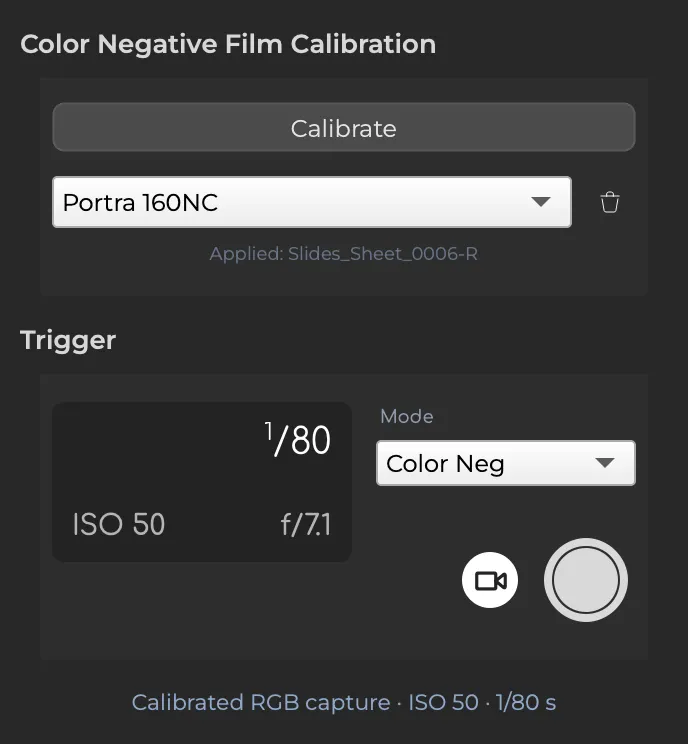
In the Color Negative Film Calibration panel of DT Nexus, click “Calibrate” to launch a new window to guide you through the profiling process.
Flat Field
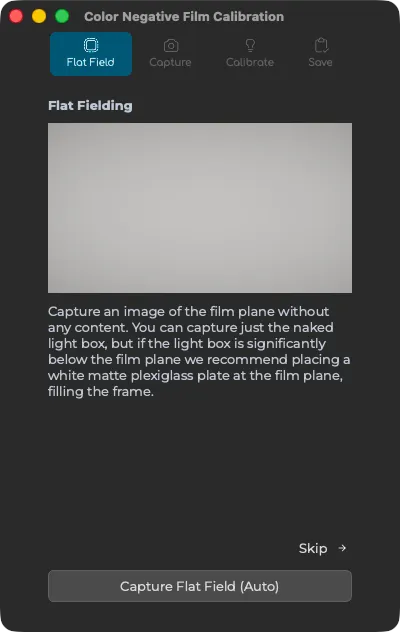
As instructed, remove any film from the lightbox so you can capture a Flat Field (also called an Even Field or an LCC) so that any falloff in light from the lens or variation in illumination inside the image area can be corrected. The ideal flat field is created using white matte plexiglass at the same plane as the film. However, the naked light box will also work well in most cases.
Capture
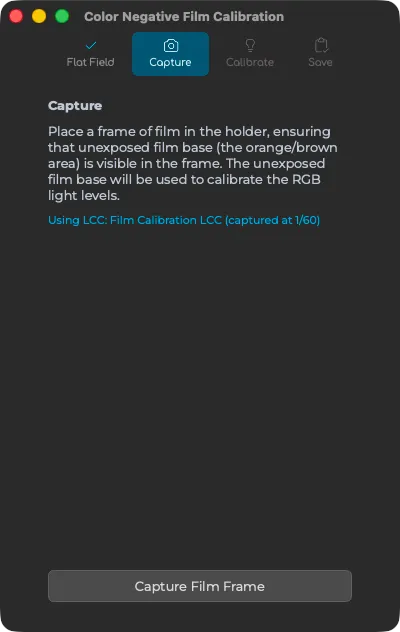
Now position the film so that some of the unexposed base is visible. Remember we are creating a calibration, so it's not important how much of the image area is visible; you will capture that after calibration is complete. "Unexposed base" is sometimes called "rebate" or "film edge".
Calibrate
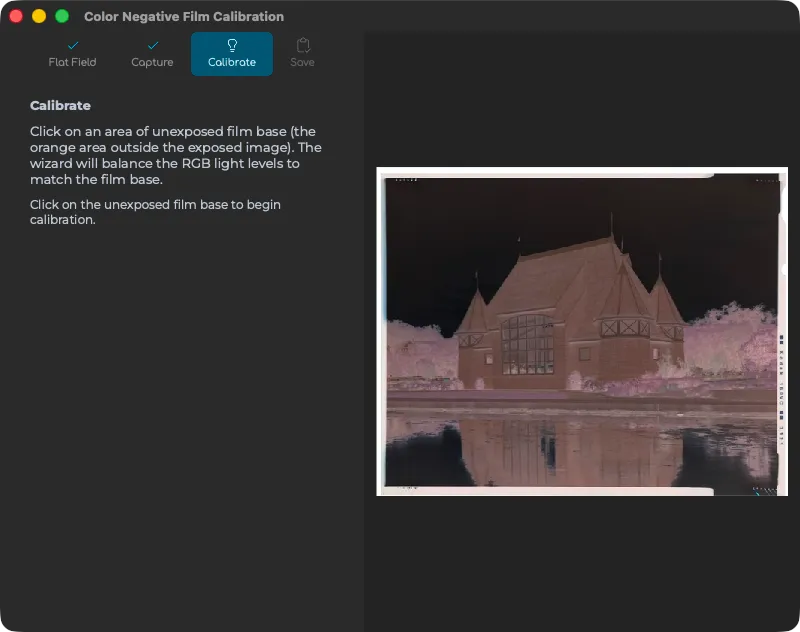
The image of your film will appear (uninverted). Click on an area of unexposed film base. If needed you can zoom in using trackpad pinch or option scroll.
Save
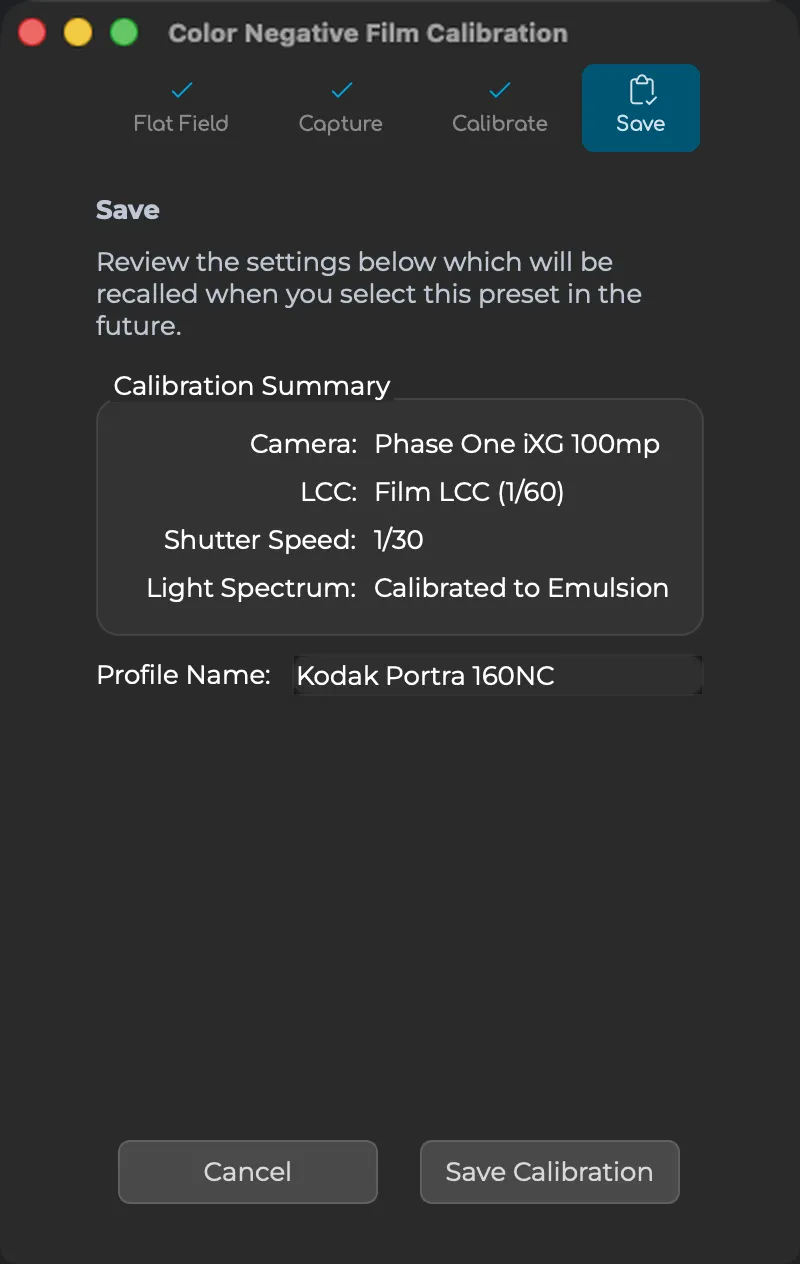
The image will temporarily invert to show a sanity check of the calibration. The image may still require contrast and white balance adjustments but subject matter color should be accurate and pleasant. If so, enter a profile name (emulsion + date is a sensible option) and save the calibration.
Emulsion Specificity
The calibration itself is specific to the emulsion of the film that you use for calibration (e.g. Portra 160NC). There was variation in some emulsions over time; for example, Kodak Portra 400 changed formulations in 2006. There is also some non-zero variation within the same emulsion and variation in processing at each lab. In DT's in house experiments these variations seem relatively unimportant to the outcome of color negative calibration making it fine to reuse the calibration across any instance of that emulsion. However, creating new calibrations takes less than a minute so you may wish to experiment with creating calibrations for each new batch of negs you are capturing and compare that to using the same emulsion calibration for each one to see if you agree with us. If you do, please share your findings with us.