Material Type Modes
DT has made a long-term commitment to develop and expand AI Crop until it handles most materials in an encyclopedic heritage collection. That will, of course, take time. In this page are a list of materials we do and do not currently support.
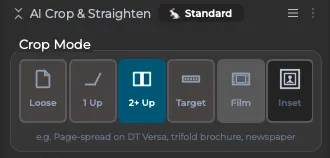
Supported Materials
Loose
The defining characteristic of this material type is that the subject is a single physical material – typically a sheet of paper. The term "manuscript" or "sheet" material are synonym, but those carry more specific and narrow definitions.
Examples: Manuscript page, page torn from a spiral notebook, map, poster, photographic print, vinyl record sleeve.
Multiple Objects ("MultiCrop")
The Loose mode of AI Crop can be set to Find either the Largest or All materials. Using All will find whatever number of distinct objects are within the frame. This does not require a careful grid or specific arrangement of material – though placing material in a grid may make handling and QC easier. At least a moderate amount of physical padding should be left between each object; a good rule of thumb is to squint heavily at the image and if you can still clearly see the individual items AI Crop should as well.
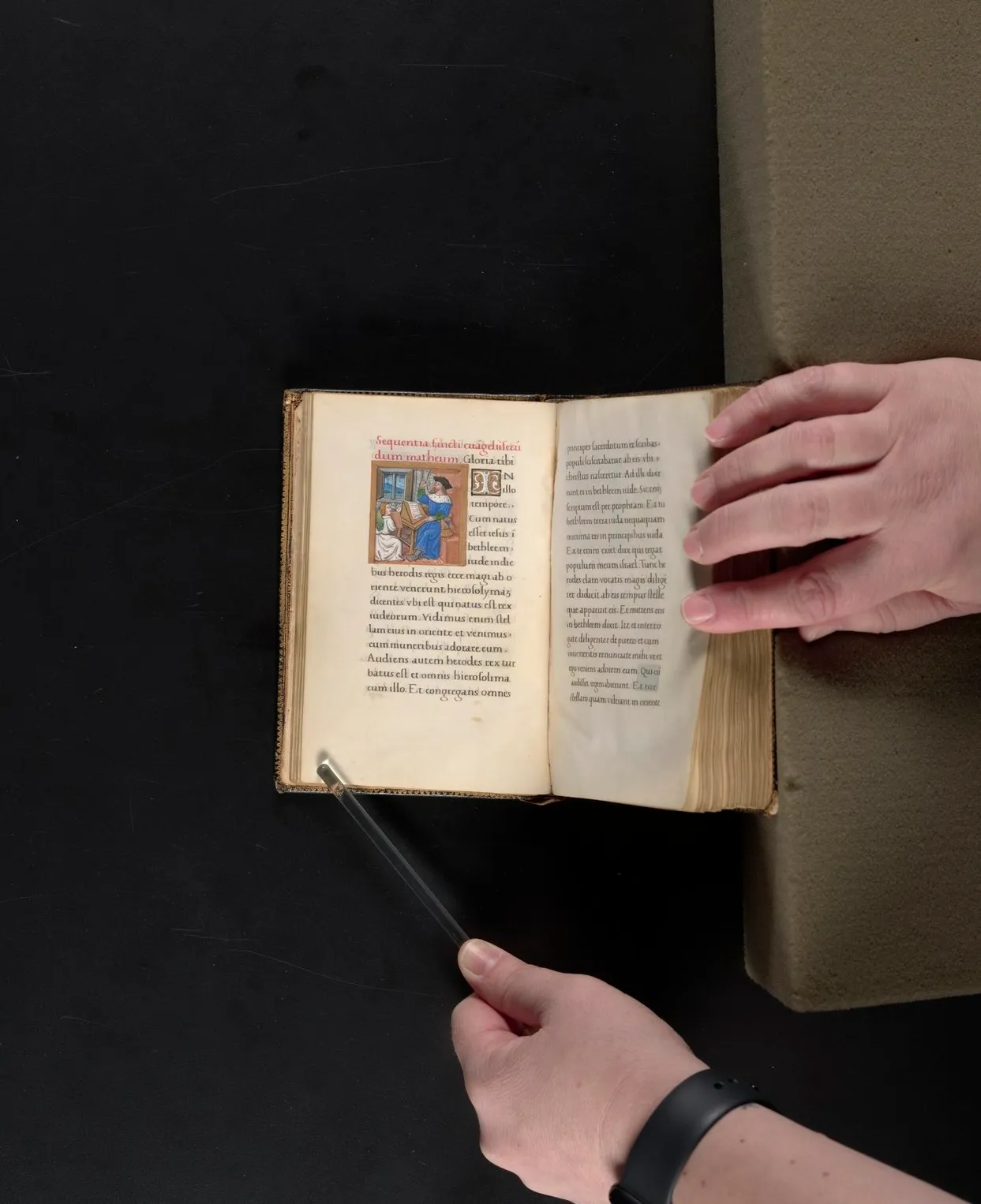
1 Up (Facing Pages)
Material that has two facing pages that are typically viewed together, but have separate places in the logical structure of the object, imaged with the object partially open (e.g. 100º) such that only one page is captured straight-on (the "imaged page"), with part or all of the other page (the "non-imaged page") angled toward the camera. ("1 Up"). The term "bound material" might be used as a very loose synonym, but some facing-materials are folded (e.g. newspapers), or are loose sheets in storage but placed side-by-side for imaging.
The DT BC100, DT V-Cradle, and use of a book wedge on a DT Element are all examples of digitization systems that are capturing "1 Up" material.
Examples:
2+ Up (Facing Pages)
Material that has two or more pages that are typically viewed together, but have separate places in the logical structure of the object, imaged open to ~180º such that the pages are captured at once. The term "bound material" might be used as a loose synonym, but some 2+ Up materials are folded (e.g. newspapers), or are loose sheets in storage but placed side-by-side for imaging.
In AI Crop 2+ Up pages can be "Split". For example, separate crops will be created for the left and right pages of a standard 2-up book, split at the gutter.
Examples: Books, magazines, atlases, diaries, trifold pamphlets, spiral bound notebooks, newspapers
DT is very interested to improve our support of unusual materials such as multi-fold pamphlets, multi-page fold-outs. Please Share Images with DT of such materials if allowed, so we can work to provide such support.
Known Material Limitations
- Graphical Dust Covers. Our training corpus was primarily historical in nature, and had very few examples of books with graphical dust covers (e.g. a full wrap photograph). As a result these materials will often pick up the cover as a part of the page even if "include fanning/cover" is disabled.
- Low-Margin Backing Paper. Pages with paper backing that is only slightly larger than the page will often result in mediocre crops. AI Crop prefers that if there is backing paper in the frame that it extends at least a couple of centimeters from the edge of the active page..
Target
This material type mode is specifically to ignore all materials and crop directly to targets in the frame.
Supported:
- DT NGT2
- ISA GoldenThread Object Level Targets (0.5x, 1x, 2x)
- ISA GoldenThread FADGI ISO19264 Target
- Image Engineering Scan Reference Chart TE263
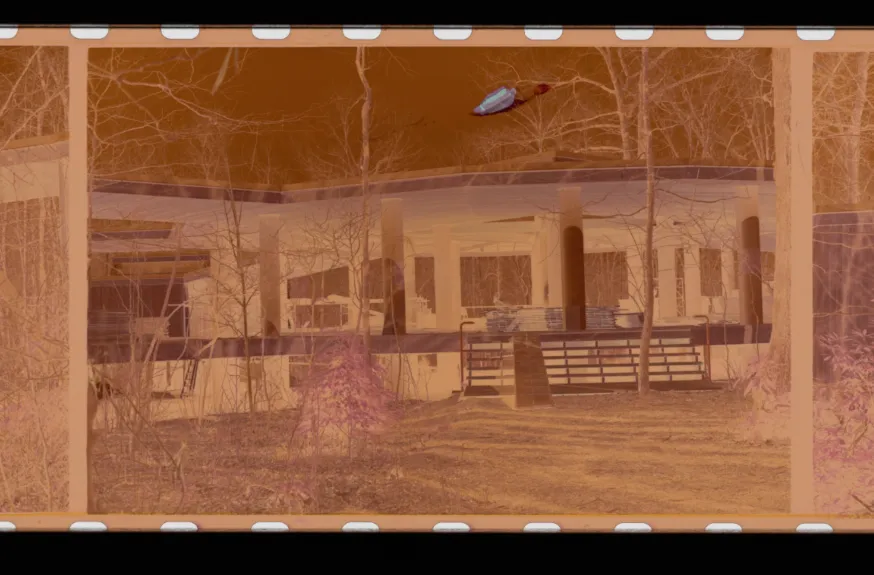
Most Transmissive Materials (e.g. Film)
With version 1.2 we have added support for AI Crop of transmissive collections such as 35mm film, 35mm slides, medium format film, and other material where the region of interest is on material that is transilluminated (lit from behind).
Unsupported Materials
Inset Materials [Coming Soon]
DT is actively working on an AI Crop mode for Inset Materials. That is matted photographs, framed paintings, scrap books, contact sheets, microfiche and other "inset" material where the region of interest is one or more rectangles inside a larger outer rectangle.
A placeholder for this feature is shown in the interface, but this feature is not ready for public testing yet.
Please considering Sharing Images with DT to help us build that feature.
Esoteric Transmissive Collections
While the current AI Crop Film mode works well to identify the image area of common materials such as 35mm film, 120 film, and slides, other materials like aerial film, glass plates, or lantern slides may perform less well. Also the option for finding the edge of the film in sheet film and glass plates is not as robust as finding the image area.
We expect we can make significant progress in these areas, especially if we receive more images from clients for our training corpus. Please considering Sharing Images with DT to help us build that feature.